|
Reverdin Consulting
Briefings
|
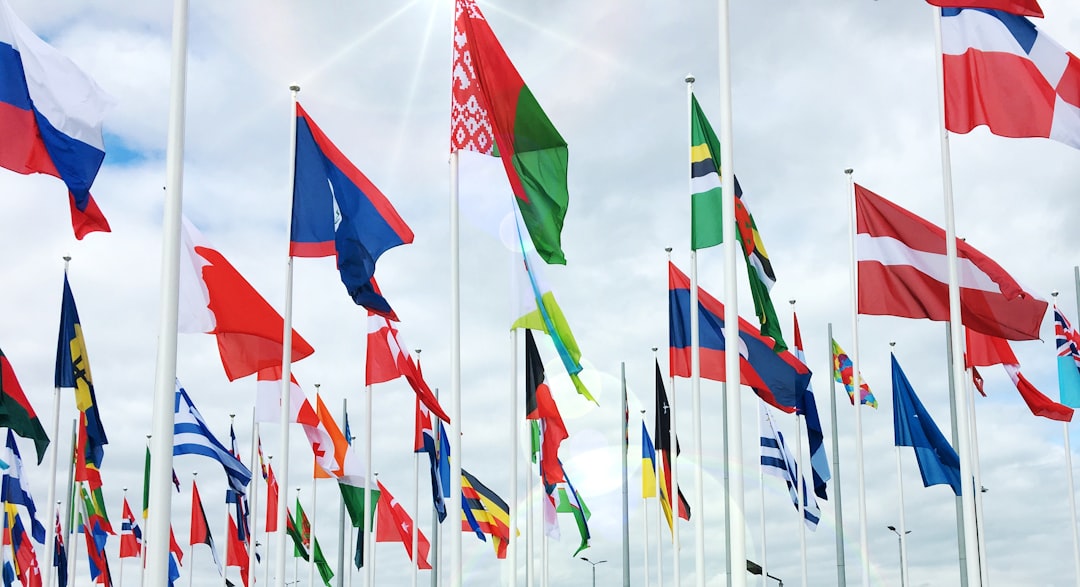 Photo : Vladislav Klapin · Unsplash Fragmented West, Realigning South: G7 Loses Multilateral AgendaThis month, the multilateral landscape following the G7 summit in France is marked by a widening gap between the narratives of Western powers and the expectations of the "Global South". As the G7 struggles to assert its leadership, the security agenda has been dominated by a ministerial of the North Atlantic Treaty Organization (NATO) that enshrined the doctrine of equipment "tested in Ukraine" as the new de facto standard for European defense. In parallel, tensions in the Asia-Pacific have prompted a rare joint statement from the United States, United Kingdom, France and Germany concerning Chinese military activities around Taiwan. On the economic front, the International Monetary Fund (IMF) demonstrated its responsiveness by granting a credit facility to Rwanda to help it cope with economic shocks linked to the war in the Middle East. Finally, North Korean diplomacy has clearly signaled, ahead of an anticipated visit by Xi Jinping, that denuclearization is no longer on the agenda. Post-G7: The Difficult Connection with the "Global South"The G7 summit, held in Évian from 15 to 17 June (context — 05/06), left in its wake an intense debate about the forum's capacity to engage effectively with non-member countries, and in particular with the "Global South". A post-summit analysis underscores the perception of a growing disconnect between the G7 agenda, centered on responding to Russia and competition with China, and the priorities of emerging and developing countries (Al Jazeera English). This dynamic of competition between the G7 and BRICS+ formats for global agenda leadership is intensifying. While the G7 seeks to maintain its central role, Global South countries express a growing desire for autonomy and diversification of their partnerships. This trend is illustrated by positions such as that of Kenyan President William Ruto, whose diplomatic posture is analyzed as an effort to assert a distinct "African agency," navigating between American expectations and the continent's own interests (Premium Times Nigeria). This challenge of representation and inclusivity remains a structural vulnerability for the G7, as its members strive to counter Beijing's diplomatic influence, which increasingly positions itself as a major actor, notably in global health, even though its actual performance remains subject to debate (@CFR_org). Reshaping Euro-Atlantic Security and Asia-Pacific TensionsThe collective security agenda was marked by a significant shift at the NATO ministerial of 18 June. The trend of making experience from the Ukrainian battlefield a procurement criterion has crystallized: equipment "tested in Ukraine" is poised to become the performance and procurement standard for European armies (r/CredibleDefense). This shift, supported by initiatives such as phase 2 of BraveTech EU and the EU's EDIP program, signals a profound reorientation of Europe's defense industrial and technological base, prioritizing resilience and proven combat effectiveness. This evolution responds directly to the context of prolonged war, where Vladimir Putin has reaffirmed his determination to continue the conflict, ruling out any negotiations with Ukrainian President Volodymyr Zelensky (Euractiv.com). In parallel, security coordination has intensified in Asia-Pacific. In a notable move, the United States, United Kingdom, France and Germany published a joint statement expressing concern over Chinese patrols off Taiwan's eastern coast (Defense News). This quadrilateral approach, outside any formal structure, signals growing Western convergence in the face of Beijing's actions and a willingness to project a form of multilateral deterrence in the Indo-Pacific. North Korea has also contributed to the recomposition of regional balances. Ahead of an anticipated visit by Chinese President Xi Jinping, Pyongyang explicitly declared that denuclearization was "no longer on the table" (Korea Herald). This announcement, coordinated with a visible strengthening of ties with China (foxnews.com), aims to consolidate an anti-American front and to formalize the failure of previous negotiation cycles, notably those conducted under the Trump administration. For its part, South Korea, under President Lee Jae Myung, is responding by seeking to make the country "irreplaceable" on economic, technological and geopolitical grounds (Korea Herald). Economic Multilateralism Confronting Geopolitical CrisesThe Bretton Woods institutions continue to play their role as crisis buffers. The International Monetary Fund (IMF) approved on 10 June a credit facility of 250 million dollars for Rwanda, specifically intended to offset external economic pressures stemming from the war in the Middle East (Africa News). This decision is a concrete example of how international financial institutions (IFI) are adapting their instruments to respond to the cascading economic reverberations of global geopolitical conflicts. This financial support is part of a contrasting African context. On one hand, positive economic signals are emerging, such as South Africa's credit rating upgrade by Fitch, a first in two decades that testifies to renewed market confidence (Africa News). On the other hand, states such as Zambia are exploring innovative financing models, such as a debt-for-energy conversion project supported by the African Development Bank (AfDB), to reconcile development with debt sustainability (Daily Maverick). In Brazil, the future G20 presidency is taking shape with clear priorities on climate. The country is increasingly emphasizing "blue carbon sinks" (oceans, mangroves) in its climate agenda, in collaboration with NGOs such as WWF-Brasil and Conservation International (Agência Brasil). This orientation could foreshadow a major theme at upcoming environmental summits and G20 meetings.
Automated monthly briefing by Reverdin Consulting · AI-curated thematic intelligence |
|
Reverdin Consulting
|