|
Reverdin Consulting
Briefings
|
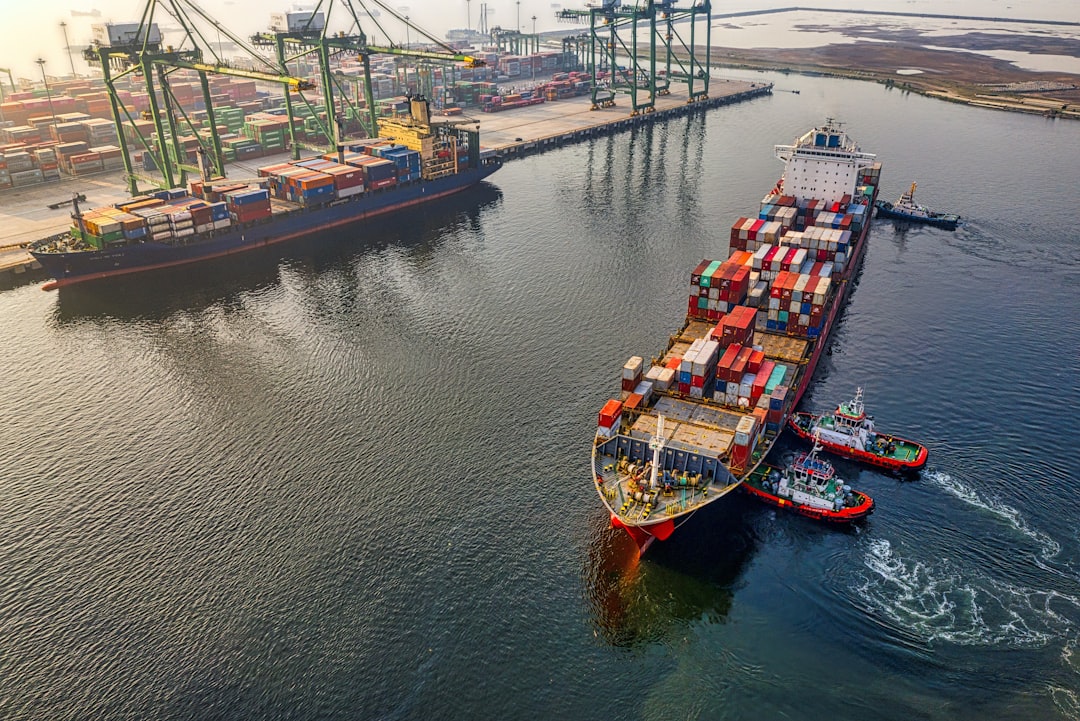 Photo : william william · Unsplash The Sino-American technological war is now being waged on supply chainsThis month, the technological confrontation between the United States and China crossed a new threshold, marked by an escalation of export controls. Washington restricted access to advanced artificial-intelligence models from Anthropic on national-security grounds, an unprecedented measure. Beijing responded by sanctioning ten American technology companies and broadening its own control regime to target "chokepoints" in global supply chains. In parallel, American economic diplomacy experienced a major shift with the temporary suspension of oil sanctions against Iran, coupled with the unlocking of 12 billion dollars in frozen funds, as part of negotiations over the nuclear programme. On the investment front, the Saudi sovereign-wealth fund issued a public warning, deeming that European regulations "harm" foreign investors, a strong signal as many countries tighten their screening regimes. Finally, multilateral and regional trade processes show signs of strain: the EU-Mercosur agreement is blocked by internal legal challenges within the EU, while the World Trade Organization agreed to establish a panel to arbitrate a dispute between China and India over solar and information technologies. United States-China: the escalation of technological warfare passes through export-control regulationJune was marked by a significant intensification of Sino-American technological confrontation, with both powers honing their arsenal of export controls as a tool of foreign policy and economic security. The most disruptive measure came from the United States. The American government issued a non-public "export-control directive" that compelled the artificial-intelligence (AI) company Anthropic to block access to its most advanced models (Claude Fable 5 and Mythos 5) to all non-American users (justsecurity.org, 15/06/2026). This decision, motivated by fears of "circumventing security controls" on the models, constitutes a major break with precedent. For the first time, the American government has used export-control laws not for physical goods or specific software, but to restrict access to a general-purpose AI model on national-security grounds. This action, likely grounded in the Export Controls Reform Act of 2018 (ECRA), positions AI as a highly sensitive dual-use good and signals a pivot from the non-intervention policy of the previous administration. Its implications are global, forcing technology companies and their international clients to navigate an increasingly fragmented and politicized regulatory landscape. China's response was not slow in coming. Weeks after the Pentagon added new Chinese companies to its blacklist, Beijing imposed commercial sanctions on ten American technology companies, including drone manufacturers and entities linked to rare earths. These companies are barred from exporting "dual-use" articles to the United States (France24 (English), 22/06/2026). More structurally, China is quietly expanding its own export-control regime beyond rare-earth minerals. The objective is to target crucial "chokepoints" in key industries of the United States and its allies (Washington Post, 17/06/2026). This proactive strategy aims to equip Beijing with greater leverage in the event of future trade wars, while protecting its own critical supply chains. For multinational enterprises, this means increased risk of sudden supply disruptions across a wider range of products than semiconductors or rare earths alone. Economic diplomacy: American détente with Iran, sanctions in AfricaAlongside its confrontation with China, American diplomacy executed a spectacular about-face toward Iran. Washington announced the suspension of sanctions on Iranian oil exports and committed to unlocking 12 billion dollars in frozen Iranian funds (Al Jazeera English, 23/06/2026). This decision, presented as a gesture of goodwill as part of peace negotiations over a 60-day period, followed Tehran's commitment to allow international nuclear inspections again (France24 (English), 23/06/2026). The impact of this decision is immediate for global energy markets, paving the way for Iranian crude's return. For economic actors, it creates both opportunities and uncertainties. Should the détente hold, it could ease pressure on energy prices and open new commercial prospects. However, the temporary nature (60 days) of the sanctions suspension introduces considerable political risk, with enterprises needing to assess the durability of this easing before committing. The American administration must also contend with internal opposition, embodied by figures such as J.D. Vance, who criticize these openings (Al Jazeera English, 22/06/2026). Illustrating the targeted and versatile nature of its sanctions policy, Washington simultaneously sanctioned Ethiopian officials due to persistent tensions in the Tigray region (Africa News, 18/06/2026). This measure shows that tools of economic pressure remain a pillar of American foreign policy, applied in differentiated fashion according to geopolitical dossiers. Foreign direct investment: Gulf sovereign-wealth funds signal regulatory risksAn alarm has been sounded this month on the international investment front. Saudi Arabia's sovereign-wealth fund, the Public Investment Fund (PIF), one of the world's largest investors, publicly warned that the tightening of European regulation "harms" foreign investors (Financial Times, 18/06/2026). While the criticism targets Europe specifically, its message is global. It reflects growing concern among major capital providers (notably from the Gulf and Asia) facing the rise of foreign-direct-investment screening mechanisms (FDI screening), foreign-subsidies regulations (such as the EU's Foreign Subsidies Regulation), and, more broadly, the "economic security" agenda in Western countries. This statement highlights the dilemma for developed economies: how to protect their strategic interests without deterring foreign capital of which they have need to finance their energy and digital transitions. For enterprises seeking to attract sovereign investors, this warning underscores the importance of a regulatory environment perceived as stable and predictable. Trade agreements and disputes: the WTO active, EU-Mercosur stalledThe global trade system continues to evolve on multiple fronts, with contrasting developments at multilateral and regional levels. Within the World Trade Organization (WTO), the Dispute Settlement Body (DSB) has formalized the establishment of a panel of experts to examine a complaint filed by China against India (Deccan Chronicle, 23/06/2026). The dispute concerns Indian measures deemed protectionist in the solar energy and information-technology (IT) sectors. This procedural advance, while routine, demonstrates that major emerging economies continue to use WTO mechanisms to settle their disputes, despite persistent blockages of its Appellate Body. By contrast, the mega trade agreement between the European Union and Mercosur faces serious legal and political obstacles. Two documents published this month in the EU's official journal attest to this: on the one hand, a formal request for an opinion from the European Parliament on the agreements and, on the other hand, an action for annulment initiated by Poland against the decision of the EU Council concerning the interim trade agreement (EU Law Live, 22/06/2026). These procedures highlight deep divisions within the EU and the complexity of ratification, indefinitely delaying the agreement's entry into force and frustrating South American partners. This case serves as a reminder that for modern trade agreements, negotiation is only the first step; internal ratification has become a political battlefield in its own right. Meanwhile, other bilateral negotiations are progressing, such as those between India and the United Kingdom, which seek to overcome obstacles related to safeguard measures on steel and the carbon-border adjustment mechanism (CBAM) (Deccan Chronicle, 08/06/2026). On the North American side, Donald Trump's statements have created "confusion" in nascent trade negotiations with Mexico, illustrating the volatility and unpredictability that political factors can inject into trade relations (NYT (Bluesky), 10/06/2026).
Automated monthly briefing by Reverdin Consulting · AI-curated thematic intelligence |
|
Reverdin Consulting
|