|
Reverdin Consulting
Briefings
|
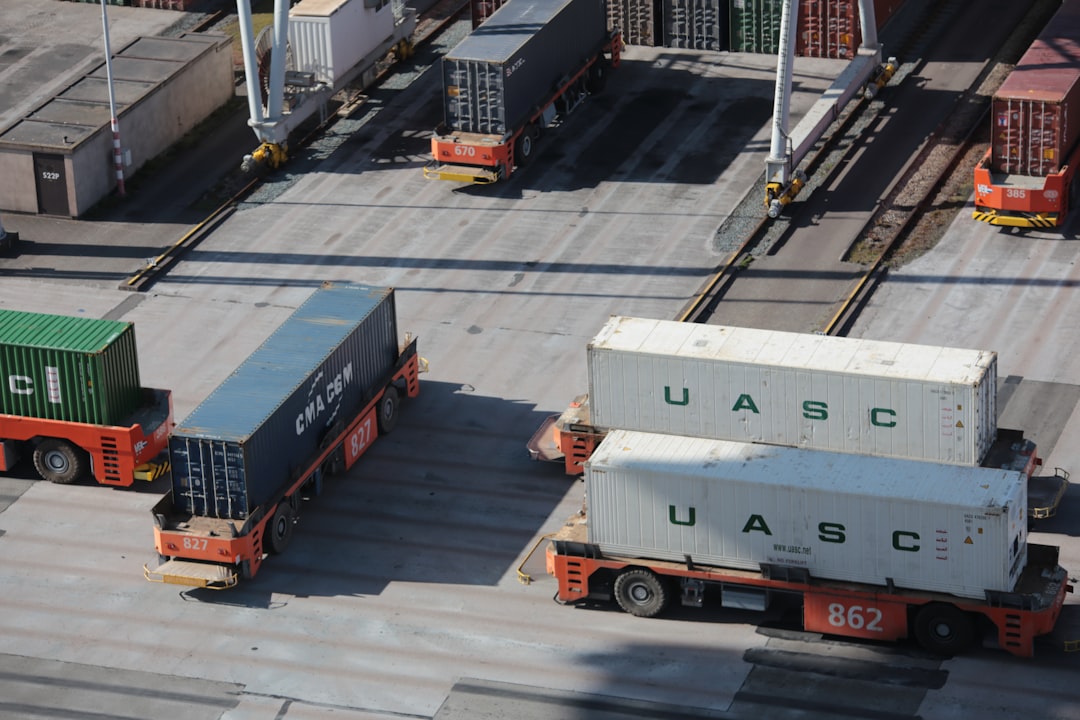 Photo : Bernd 📷 Dittrich · Unsplash Railway Networks in Crisis: Europe Facing Critical Infrastructure FailuresThis month, the vulnerability of critical infrastructure has been highlighted by a series of major railway outages across Europe, particularly in the Netherlands, illustrating the challenges of resilience in the face of technical failures and climate impacts. Meanwhile, geopolitical tensions persist, with diplomatic efforts to secure the Strait of Hormuz, whose reopening has triggered a decline in jet fuel prices. On the decarbonisation front, competition is intensifying: as the United Kingdom crosses a symbolic milestone with electric vehicle sales exceeding petrol vehicle sales for the first time, the European Union denounces a "predatory strategy" by China on the global EV market. The logistics sector continues its consolidation with CMA CGM's project to acquire a FedEx unit for 1.4 billion dollars. Finally, several structuring regulatory frameworks, notably on rail and road pricing (Eurovignette) in Europe, continue to advance. Critical Infrastructure: European Railway Networks Under StrainThis month has revealed deep vulnerabilities within European transport infrastructure, particularly in the railway sector. A large-scale railway outage in Rotterdam has paralysed a major logistics hub, exposing the fragility of the Dutch network (RailFreight.com, 06/07). This incident echoes recurring disruptions recorded in Barcelona, where infrastructure manager ADIF and a Catalan operator threaten Siemens Mobility with legal action for repeated system failures (Railway Gazette International, 16/06). These technical problems are compounded by the effects of climate change. In France, heatwaves raise questions about the survival of the network, with risks of rail expansion and rolling stock failures, highlighting an urgent need for adaptation (alternatives-economiques.fr, date unspecified). The resilience issue is also raised in Ireland, where Irish Rail's new computer system, valued at 30 million euros, has failed critical security tests, compromising its interconnection with European systems (archive.md, 29/06). Faced with these challenges, states and regulators are adjusting their strategies. The Italian Government has published its "National Strategy for the Resilience of Critical Entities", implementing a European directive, to improve prevention and response to physical and hybrid incidents (Governo Italiano, 11/06). In parallel, the European Commission has published a regulation on the use of railway infrastructure capacity in the single area, aiming to optimise and harmonise the network (EU Law Live, 10/06). This market dynamic, however, clashes with national practices, as demonstrated by the Commission's warning to the Netherlands, whose capacity allocation rules are suspected of distorting competition (EU Law Live, 30/06). Decarbonisation and Geo-Economic Competition: The Electric Vehicle Battle IntensifiesThe transition to electric mobility is at the heart of growing geo-economic competition. This month, the United Kingdom marked an important milestone: for the first time, electric vehicle (EV) sales over 12 months (516,490 units) have exceeded petrol car sales (504,010) (Carbon Brief, 25/06). This underlying trend is, however, darkened by strong commercial tensions. The European Union has described its automotive industry's situation as a "mortal danger" in the face of Chinese subsidised EV overproduction (EU Observer, 07/07). The Commissioner for the Internal Market, Stephane Séjourné, has denounced a "predatory strategy" by China, which is flooding the global market with subsidised production surplus of up to 10,000 euros per vehicle. Chinese models now represent more than 15% of the electrified vehicle segment in several regions of the world, directly threatening established manufacturers. In the aviation sector, decarbonisation is progressing on several fronts. A consortium led by Firefly and Chevron Lummus Global is developing innovative technology to produce sustainable aviation fuel (SAF) from wastewater sludge, via a catalytic pyrolysis process (Springwise, 17/06). In parallel, the Association of Southeast Asian Nations (ASEAN) is identified as an actor with significant potential for the global SAF market, thanks to its abundance of raw materials (The Jakarta Post, 29/06). The maritime transport sector is no exception, with concrete electrification initiatives. Brittany Ferries has launched the second phase of its programme at Portsmouth, installing charging infrastructure for batteries and shore power connection (cold ironing) (archive.is, 19/06). Tensions on Global Supply Chains: From the Strait of Hormuz to African PortsThe security of maritime routes remains a major concern. Coordinated efforts, led under the auspices of the Secretary General of the International Maritime Organization (IMO), Arsenio Dominguez, are underway to establish a safe evacuation route in the Strait of Hormuz (Bloomberg Markets, 21/06). The prospect of regional stabilisation following a reopening agreement has already had a tangible impact, triggering a drop in jet fuel prices and providing relief to airlines (FT Markets, 18/06). In the container logistics sector, the industry continues its consolidation. French group CMA CGM is about to finalise the acquisition of a FedEx logistics unit for 1.4 billion dollars, an operation that is reshaping the balance of global freight (archive.ph, 01/07). In parallel, the African continent is establishing itself as a future logistics pivot. The World Bank has ranked Nigerian ports Apapa and Tin Can among the 20 most improved ports in the world, rewarding modernisation efforts (Premium Times Nigeria, 16/06). This momentum is supported by innovation: experts highlight the potential of artificial intelligence to increase the efficiency and throughput of African ports, from Côte d'Ivoire to Kenya, enabling them to capture a growing share of international trade (RFI — Afrique, 12/06). Regulatory Frameworks and Governance: Europe Refines Its Rules, the World WatchesSeveral major regulatory developments in Europe will have global implications. The EU Council and European Parliament have reached a provisional agreement to modify Eurovignette rules, which governs road pricing for heavy goods vehicles, an advance that will impact the cost of freight transport on the continent (EU Law Live, 01/07). In the aviation sector, the European Commission is due to rule on 17 July on the extension of its emissions trading system (ETS) to international flights. This decision is subject to geopolitical considerations, notably the potential reaction from the US administration, illustrating the overlap of climate and diplomatic policies (Contexte, 07/07). In parallel, the European courts have annulled the exclusion of business aviation from the green taxonomy, following a legal challenge by Dassault, reintegrating the sector into the scope of investments considered sustainable (Actu-Environnement, 24/06). Border management has also seen an important development with the temporary suspension of biometric data collection under the EU's new entry/exit system (EES). This decision, taken to avoid chaos at airports this summer, illustrates the operational difficulties associated with the large-scale deployment of new security technologies (EU Observer, 07/07). European airports are indeed experiencing major disruptions, with border wait times reaching five hours in some cases (archive.ph, 07/07). Finally, the governance of major infrastructure projects is a universal issue. While global investments could exceed 150 trillion dollars by 2050, models such as Norway's, which requires external quality assurance, demonstrate that it is possible to dramatically reduce cost overruns, a valuable lesson for decision-makers worldwide (The Conversation FR, 05/07).
Automated monthly briefing by Reverdin Consulting · AI-curated thematic intelligence |
|
Reverdin Consulting
|