|
Reverdin Consulting
Briefings
|
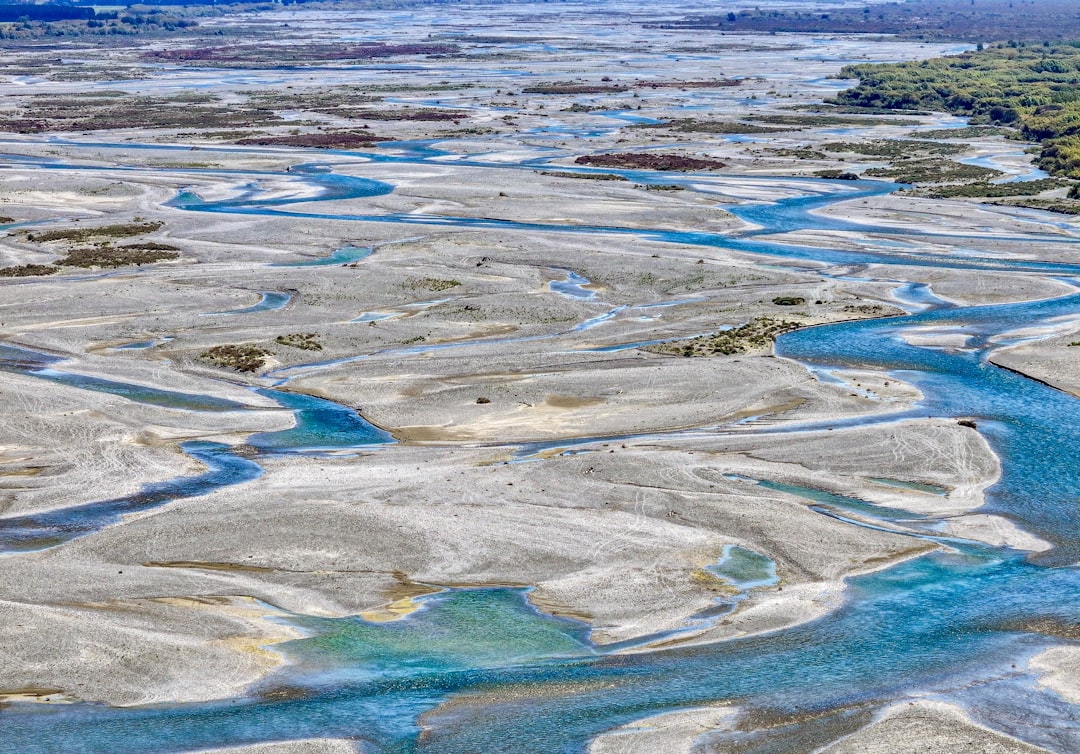 Photo : Maximilian Brand · Unsplash Forever Pollutants: Global Regulatory Acceleration in Response to Diffuse PFAS ContaminationThis month, the emergence of the El Niño phenomenon in the Pacific poses an increased risk of droughts, floods and heat waves on a global scale (Bloomberg Markets, 11/06/2026). In the United States, the water crisis is intensifying with the Colorado River reaching historically low levels, exacerbating legal tensions between seven States (NYT (Bluesky), 17/06/2026). Contamination by forever pollutants (PFAS) is becoming a major regulatory and judicial issue: the European Chemicals Agency (ECHA) has classified TFA, an omnipresent PFAS, as "presumed toxic to reproduction" (Vert.eco, 10/06/2026), while in the United States, the Pentagon has postponed the remediation of nearly 200 contaminated military sites (NOTUS, 12/06/2026). On the multilateral front, financing of 3.9 billion US dollars has been approved by the Global Environment Facility (GEF) for environmental projects covering the 2026-2030 period (Global Government Forum, 17/06/2026). Finally, a new analysis by the United Nations Children's Fund (UNICEF) reveals that nearly half of children worldwide, or 1.1 billion, are exposed to multiple simultaneous climate threats (Mail & Guardian, 17/06/2026). PFAS: Global Contamination at the Heart of Regulatory and Judicial AccelerationThe issue of per- and polyfluoroalkyl substances (PFAS) has dominated environmental news this month, illustrating a convergence of health concerns, regulatory actions and disputes on an international scale. At the European regulatory level, a strong signal has been sent by the European Chemicals Agency (ECHA). Its evaluation committee has deemed trifluoroacetic acid (TFA) — the smallest of the PFAS, omnipresent in water and food — to be "presumed toxic to human reproduction" (Vert.eco, 10/06/2026 ; Reporterre, 11/06/2026). This classification, should it be formally adopted by the European Commission, could lead to a significant tightening of regulations for pesticides and other industrial products that degrade into TFA. This scientific decision puts pressure on regulators, as studies already show massive contamination: 92% of drinking water in France would contain TFA (Vert.eco, 10/06/2026). The local consequences of this diffuse contamination are being felt acutely. In France, many municipalities report being ill-equipped, lacking both the financial means and technical solutions to treat contaminated water and comply with new European standards (Vert.eco, 11/06/2026). This incapacity is leading to a multiplication of consumption bans and legal action: more than 400 residents and seven municipalities have filed suit with the Strasbourg administrative court to compel the French State to assess health risks and take action (Reporterre, 15/06/2026). Food chain contamination has also been confirmed in Italy, where wine produced in a polluted area proved to be contaminated with high concentrations of PFAS, underscoring the persistence and migration of these pollutants through the agricultural ecosystem (Corriere della Sera, 13/06/2026). The issue is equally acute in the United States, where the management of PFAS pollution by state entities is being scrutinized. The Pentagon has quietly delayed remediation operations on nearly 200 military sites. This delay is said to be a direct consequence of the recent classification of PFAS as hazardous substances by the Environmental Protection Agency (EPA), which now imposes stricter and more costly regulatory requirements on the military (NOTUS — News of the United States, 12/06/2026). This situation highlights tensions between defence imperatives and environmental obligations, and could expose the US government to litigation from affected communities. Water Security: Geopolitical Tensions and Urban Crises Against a Backdrop of Climate DisruptionWater resource security is being severely tested in several regions of the world, generating geopolitical tensions, local governance crises and drastic restriction measures. In the United States, the mega-drought affecting the Colorado River basin has reached a critical threshold. The river is at unprecedented levels for decades, threatening the water supply for 40 million people. This situation exacerbates tensions among the seven States dependent on its waters, who threaten to confront each other in court over the sharing of remaining resources (NYT (Bluesky), 17/06/2026). Faced with this vulnerability, costly diversification strategies are being promoted, such as the San Diego desalination plant, presented as a model of resilience despite the high cost of the water produced (The Washington Post, 12/06/2026). Elsewhere in the country, cities like Raleigh, North Carolina, are considering emergency measures, including a complete ban on lawn watering, in response to worsening drought (Raleigh News & Observer, 12/06/2026). Geopolitical tensions over water are also acute. In South Asia, India's new Water Minister has adopted a hardline stance on the Indus Waters Treaty, stating that "not a single drop will flow to Pakistan" beyond treaty obligations, reviving a historical friction point between the two nuclear powers (Livemint, 09/06/2026). In the Middle East, Iran's water crisis, already severe due to drought and unsustainable management, is being exacerbated by the geopolitical context. Satellite imagery confirms the gradual disappearance of several major lakes (Al Jazeera English, 09/06/2026). In this context, a New York Times analysis suggests that US strikes targeted two drinking water facilities in southern Iran, raising questions of international law (NYT (Bluesky), 11/06/2026). In Africa, the crisis is often linked to governance failures. In Johannesburg, South Africa, repeated water cuts highlight "empty promises and a lack of accountability", undermining the delivery of basic services and citizen trust in local institutions (Daily Maverick, 17/06/2026). Climate Change Manifestations: El Niño, Multiple Shocks and Transforming Arctic EcosystemsThe confirmed return of the El Niño phenomenon in the tropical Pacific Ocean constitutes a major climate alert for the months ahead (Bloomberg Markets, 11/06/2026 ; NYT (Bluesky), 11/06/2026). Declared by several meteorological agencies, including those of Japan and Australia, this event is expected to amplify extreme phenomena such as floods, droughts and heat waves, already exacerbated by climate change. The Australian agency (Bureau of Meteorology, BoM) has thus warned of an increased risk of severe summer heat waves and fires (The Age, 16/06/2026). The human impact of these cumulative climate shocks is alarming. A UNICEF analysis reveals that 1.1 billion children — nearly half of all children in the world — are simultaneously exposed to multiple climate risks, making their access to water and a healthy environment increasingly precarious (Mail & Guardian, 17/06/2026). In the Arctic, signals of systemic change are multiplying. A study indicates that the Arctic Ocean has reached a potentially catastrophic tipping point, with rapid acidification due to CO2 absorption and salinity changes that threaten the entire marine food chain (New Scientist, 16/06/2026). Paradoxically, accelerated glacial melt is creating new opportunities for certain organisms. By transporting rocks to the seafloor, icebergs create new benthic habitats, veritable "oases" of biodiversity for creatures such as corals and sponges, thereby profoundly reshaping ecosystems (Nature (Bluesky), 11/06/2026 & 12/06/2026). Governance, Financing and Regulation: Contradictory SignalsFaced with the scale of challenges, governance and financing responses are mixed. On the multilateral front, a positive signal comes from the Global Environment Facility (GEF), where more than 180 countries have approved an envelope of 3.9 billion dollars for the 2026-2030 period. This financing will support projects for biodiversity conservation, climate resilience and water management, with specific allocations for least developed countries (35%) and local and indigenous communities (20%) (Global Government Forum, 17/06/2026). On the legal front, growing inter-judicial dialogue between regional human rights courts (European, Inter-American and African) shows a convergence towards recognition of a right to a healthy climate and the strengthening of State obligations (verfassungsblog.de, 17/06/2026). This judicialization of climate could become an increasingly powerful lever for action for NGOs and citizens. However, blockages and regressions persist. In the United States, the Department of Justice (DoJ) has sought to have prosecutions for air pollution dismissed against a power plant operated by Elon Musk's xAI company, invoking national security grounds, a move that could set an alarming precedent for the enforcement of environmental law against industries deemed strategic (The Washington Post, 17/06/2026). Finally, in Europe, although the regulatory framework is strengthening, objectives are not always being met. EU greenhouse gas emissions increased by 1% in 2025, marking a slowdown in decarbonization efforts (Politico EU, 17/06/2026). In terms of the circular economy, a Jacques Delors Institute report highlights an annual investment shortfall of 82 billion euros to meet EU objectives, with the current circularity rate capped at 12%, far short of the 2030 target of 24% (Jacques Delors Institute, 11/06/2026).
Automated monthly briefing by Reverdin Consulting · AI-curated thematic intelligence |
|
Reverdin Consulting
|